

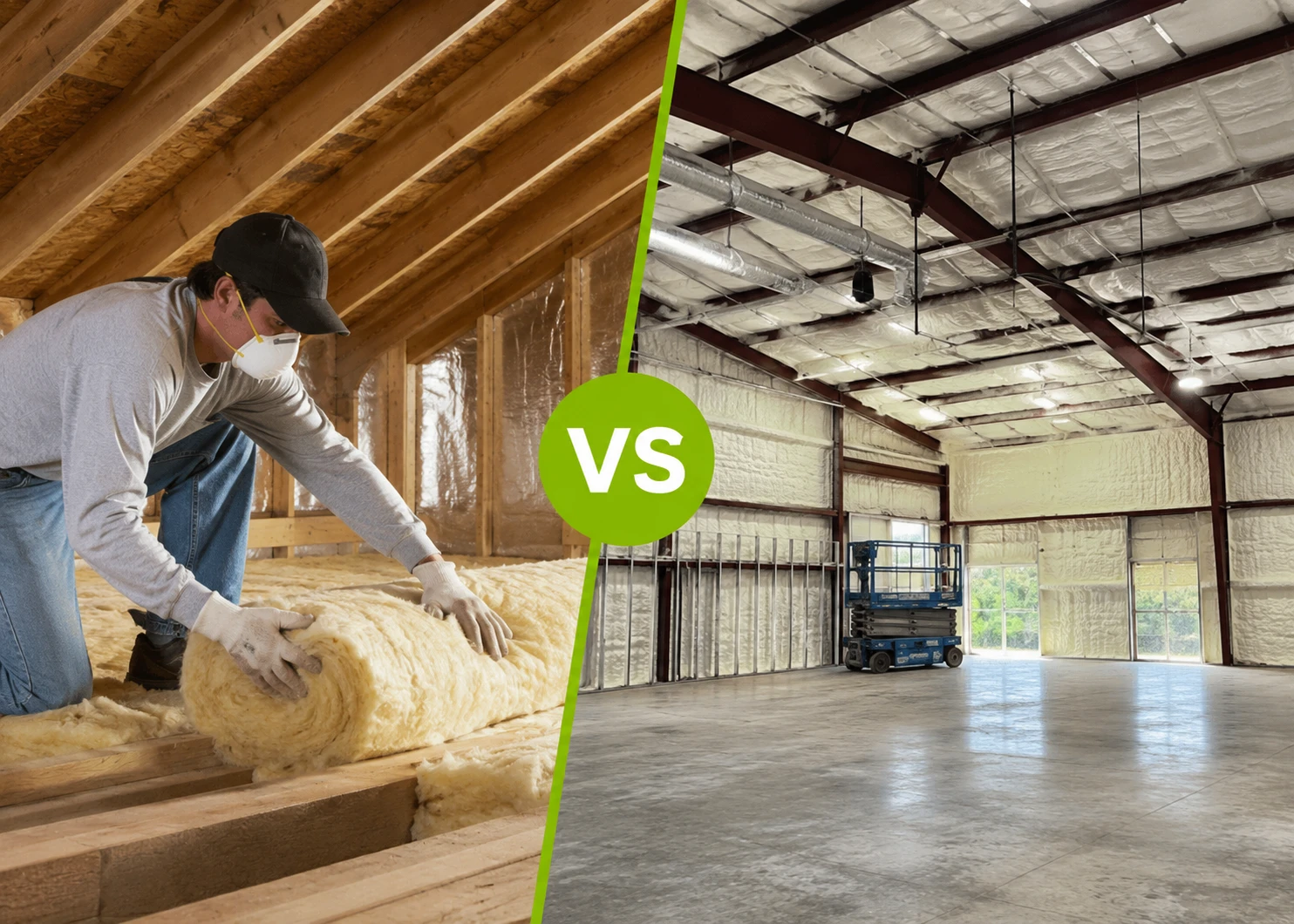
Whether you’re a homeowner or an entrepreneur, insulating your property is key to keeping out the effects of the elements and keeping electricity bills under control. But despite similar functions, residential vs commercial insulation are two different things. Commercial insulation needs to adhere to stricter code and demands a much higher upfront installation budget. On the other hand, residential insulation is quicker to install and doesn’t always include soundproofing. If you’re wondering what sets one insulation type apart from the other, you should read the blog we’ve prepared below.
Contrasting Home & Business Insulation: Cost, Complexity & More
Both homes and commercial establishments demand quality insulation, but have you ever stopped and wondered what the difference is between the two? Insulating a home is simpler and faster, while commercial insulation installation demands additional care against fires and acoustics. If you’re interested in comparing the two insulation types; the section below breaks them down for you.
Read along as we highlight different comparison categories.
Code Compliance
The difference starts even before the work begins. A residential insulation installation project must adhere to local and international codes like the IECC. On the other hand, commercial insulation needs to follow much stringent building codes, such as the ASHRAE 90.1 or IECC Commercial Provisions.
Insulation Material
Next, lets compare the materials of the insulations. Residential properties usually rely on standard cellulose, fiberglass batt or medium-density spray foam. On the other hand, business facilities must use high-density spray foam, mineral wool or rigid foam insulation instead.
Thermal Bridging
The two insulation types also vary in framing and thermal bridging. Residential properties have wood framing; and this is usually enough to insulate them. But, commercial insulation demands more. Property owners need to have external continuous insulation to keep the effect of the steel studs at bay.
Project Scope
Moving on, the sheer scope of the projects also set them apart. Homes are shorter with limited square footage; so the projects are at a much lower scope. On the other hand, commercial properties span thousands of square feet and multiple stories, making the insulation installation project much bigger and complex.
Installation Cost
The next thing we’re looking at is the residential vs commercial insulation price. Since homes are smaller, the upfront cost is low, but the expense per square foot is high. However, due to the bulk buying and larger surface areas, commercial insulation is more expensive upfront, but more affordable per square foot.
Fire Safety
Residential properties only need standard materials like mineral wool to protect the occupants and structure against fire breakouts. On the other hand, since commercial properties like restaurant kitchens deal with higher temperatures, they require stricter fire rating and additional fireproofing layers.
Vapor Retardation
When contractors insulate homes, their goal is to keep out condensation in winter seasons and the air conditioning over the summer. The materials are usually just kraft-faced fiberglass and vapor-retarding paint. However, commercial insulation needs to stand strong against condensation throughout and is installed in fluid or foil -faced rigid foam board.
Soundproofing
Want more? Yet another difference between the two insulation types is the soundproofing. Where residential soundproofing is usually limited to media rooms and bathrooms, commercial properties must absolutely be soundproofed to create quiet and peaceful office and hospital environments.
| Did You Know?A quality insulation installation service has a 100-117% ROI |
Installation Complexity
Residential insulation installation requires a few trained professionals and the right safety gear. Certain insulation types can even be DIY-ed. On the other hand, commercial insulation installation demands a team of skilled commercial experts, scaffolding, specialized pumping equipment and adhering to much stricter safety standards.
Durability & Longevity
Finally, residential insulation is manufactured to keep the house comfortable for the next handful of decades. On the other hand, commercial insulation material is more durable; demanding less upkeep and supporting your business for several more years on top.
Conclusion
In a nutshell, although the goal of every insulation installation service is the same, there are plenty of key differences that most people don’t know about. Residential insulation is less durable, but quicker and more affordable to set up. On the other hand, insulating commercial properties demand adherence to much stricter guidelines and requires a team of professional commercial insulators. We hope this blog helped you understand residential vs commercial insulation in detail. If you have more questions, please reach out to us.
FAQS
How long does it take to insulate an apartment complex?
Expert insulation contractors usually take 2-6 weeks to insulate an apartment complex.
Can I stay inside my home while it’s being insulated?
It’s best to vacate the house and return after the end of the off-gassing period.
What is the best insulation type for the attic?
According to experts, blown-in fiberglass and cellulose are the ideal materials to insulate attics.